Categories
Children and Youth

Celebrating the Class of 2023

On June 4, the Church of the Nativity will honor its graduating seniors during the 10:30 am Holy Eucharist. The service will acknowledge and bless the hard work and dedication of these students as they embark on a new journey. Following the service, the seniors and their parents will have lunch in the parish hall. If your family has a graduating senior, RSVP to Jeremy Clos by May 12 to confirm your family’s participation. Email Jeremy Clos

Graduation from high school is a significant achievement, marking the transition from adolescence to adulthood. It is a time when seniors are on the cusp of new beginnings and possibilities, and it’s essential to acknowledge and celebrate their accomplishments. Celebrating a high school graduation is a way to acknowledge the blessings and gifts that God has bestowed upon these young adults. It’s also an opportunity to recognize how God has worked through them, shaping them into the individuals they are today.

Once we’ve firmed up the number attending, we will be reaching out for help with the food, and everyone is encouraged to lend a hand. It is a chance to offer a tangible expression of love and support from the church community, showing the seniors that they are valued and cherished and that they have a place within the church even as they move on to new phases in their lives.

Congratulations to all the graduating seniors, and may God bless them in their future endeavors.

— Jeremy Clos

Categories
Adult Formation

Adult Formation: The Creeds

From the earliest days of the Church, Christians have recited short summaries of the faith, known as creeds, and they continue to be a cornerstone of our religious practice today. We recite the Nicene creed each week during Holy Eucharist and the Apostle’s creed remains an important centerpiece of the Baptismal liturgy as well as the Daily Office.

But why?

Beginning in June, we will explore and unpack the religious tradition contained within the creeds in a six-part course. We will delve into discussions around what the creeds are, what work they do, and what we mean when we affirm God as Trinity, Jesus as fully human and fully divine, the passion and resurrection, the Holy Spirit, and the one “Holy, catholic, and apostolic church.”

Please register to indicate your interest, let us know what potential times work best, and allow us to purchase the right amount of materials for the class.

— Jeremy Clos

Categories
Children and Youth From the Clergy Uncategorized

Safe Church Training

The Episcopal Church and the Diocese of North Carolina take the issue of sexual misconduct and abuse very seriously. To address this issue, the Church has implemented policies and procedures that include requiring all clergy, staff, lay leaders, and volunteers to complete a series of courses in Safe Church Training. This training is designed to help prevent cases of sexual misconduct, abuse, and harassment within the Church and promotes a safe and healthy environment for everyone participating in its ministries and programs.

Church of the Nativity has long participated in Safe Church Training; each year we ask all volunteers and leaders of the Church to complete the required training. The in-person training of the past has been replaced by an online course comprising several different modules, a subset of which are required for various different positions. If you are a volunteer or lay leader, you will soon receive an invitation from Jeremy Clos to participate in the course. Once you’ve been invited, you can complete these modules at your own pace. Once completed, you are certified for a period of three (3) years before you will need to revisit the training.

Safe Church Training covers a range of topics relevant to various ministries here at Nativity, including how to recognize and report abuse, set boundaries, encourage appropriate behavior, and create safe environments for children and vulnerable adults. Therefore, Vestry members, all clergy and staff, those making home or hospital visits (ie. Stephen Ministers or Lay Eucharistic Visitors), and anyone working with youth or children’s formation should complete the course. By completing this training, individuals are better equipped to prevent and respond to instances of misconduct and abuse within the Church and the wider world. 

At Nativity, Safe Church Training is not just about meeting a legal requirement or fulfilling an obligation. Instead, we focus on creating a culture of safety, respect, and accountability within our Church. We seek to ensure that all individuals, regardless of their age, gender, or background, feel safe and valued within the community. It also helps to build trust and confidence among church members by demonstrating that our Church is committed to protecting its members and that we possess a clear process for reporting and addressing any incidents of misconduct. When these concerns are taken seriously and addressed in a timely and appropriate manner, confidence within the community increases. 

If you have questions about Safe Church Training or have not yet received an invitation, please reach out to Jeremy Clos, Lay Associate for Christian Formation. Email Jeremy Clos

Categories
Uncategorized

Social Justice: April 2023 Update

Social Justice at Nativity

Nativity’s Social Justice Committee shares the following announcements, events and recommended resources to the Nativity community as we continue our pursuit of racial justice and reconciliation.

Announcements & Events

Black Farmers’ Market – Raleigh, 2nd and 4th Sundays, 1–4 pm
Southeast Raleigh YMCA, 1436 Rock Quarry Rd, Raleigh, NC 

Remembering Warren County: North Carolina and the Continuing Struggle for Environmental Justice, April 20, 2023, 7–8 pm
North Carolina Museum of History, 5 East Edenton Street, Raleigh
Tickets are free. A panel discussion of environmental leaders and activists, reflect on NC’s role in the origins of the environmental justice movement by way of the 1982 PCB protests in Warren County and efforts to address the ongoing issues regarding environmental justice nationwide.

The Color Purple, April 22-30, 2023
Martin Marietta Center for the Performing Arts (f.k.a. Duke Energy), 2 East South Street, Raleigh
Tickets start at $40. A teenage Celie is torn from her beloved sister and forced into an abusive marriage. Over the next forty years, while Celie encounters repression, despair, and heartbreak, she also discovers hope in a group of friends who inspire her to find her voice, discover her beauty and change her life.

Saint-Saëns Cello Concerto No. 1, April 28 – 29, 2023
Meymandi Concert Hall, Martin Marietta Center for the Performing Arts (fka Duke Energy), 2 E. South St., Raleigh
Tickets start @ $21.50. Sterling Elliot, cello soloist.

The Face of Emmett Till, May 12 – 21, 2023
Pure Life Theatre, 3801 Hillsborough St. Suite 100, Raleigh, NC
Tickets start at $28. The Face of Emmett Till is a true-to-life dramatization of the death of 14-year old Emmett Till, a Chicago teenager who, while visiting relatives in Money, Miss., in August 1955, was kidnapped, tortured and murdered by two white men who claimed they wanted to teach him a lesson for “allegedly” whistling at a local white woman. 

Michael Richards Are You Down? Exhibit, Open through July 23, 2023
North Carolina Museum of Art, 2110 Blue Ridge Road, Raleigh, NC
Registration not required. Michael Richards’s visionary sculptures and drawings, created between 1990 and 2001, engage Blackness, flight, diaspora, spirituality, police brutality, and monuments in his largest retrospective to date. Michael Richards: Are You Down? takes its name from one of the last artworks the artist created. In his sculptures and installations, Richards gestures toward both repression and reprieve from social injustices and the simultaneous possibilities of uplift and downfall, often in the context of the historic and ongoing oppression of Black people. Flight and aviation were central themes for Richards as an exploration of freedom and escape, ascendance and descent. These themes are especially evident in Richards’s engagement with the legacy of the Tuskegee Airmen, including his well-known sculpture Tar Baby vs. St. Sebastian (1999)—a version of which has been on continuous display at the NCMA since 2003. 

Ruth E. Carter: Afrofuturism in Costume Design Exhibit, Open through August 6, 2023
North Carolina Museum of Art, 2110 Blue Ridge Road, Raleigh, NC
Tickets: $23.60. Academy Award–winning costume designer Ruth E. Carter has defined generations through her work in film and TV. Her art adds dimensionality, flair, and culture to the characters she envisions, giving power to the incredible actors who wear her designs. Her vibrancy and attention to detail in costuming is integral to translating stories of race, politics, and culture to the big screen. From humble roots in Massachusetts, Carter has helped style the Afrofuturism movement for almost 40 years. Creating pieces for films such as Black Panther, Malcom X, Selma, and Do the Right Thing, Carter has designed costumes for legends like Oprah Winfrey, Denzel Washington, Chadwick Boseman, Eddie Murphy, Angela Bassett, and Forest Whitaker. In this exhibition the NCMA displays more than 60 of Carter’s original garments while also showcasing her immersive process, historical research, and the attention to detail that imbues every project she brings to life. 

Recommended Resources

Racial Reconciliation and Social Justice (Episcopal Diocese of North Carolina)
This website is updated regularly with social justice resources recommended by the Diocese.

Categories
Peace Library Reviews Social Justice

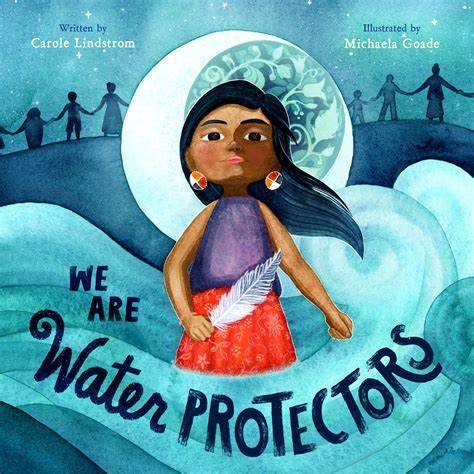
We Are Water Protectors (Peace Library Review)

by Carole Lindstrom, author; and Michaela Goade, illustrator
review by Becky Showalter


We Are Water Protectors, written by Carole Lindstrom and illustrated by Michaela Goade, is a children’s book inspired by the Indigenous-led environmental protests that have been held across the United States for many years. In particular, it tells the story of a little girl taking part in the Standing Rock protests, which our own Bishop Curry took part in in 2016 and 2017.

With stunning colors and artwork, this book received the Caldecott Medal for its illustrations in 2021 — the first time an Indigenous illustrator has done so. We Are Water Protectors is a reminder that each one of us can be the hero in protecting the earth and the water that is so critical to our lives. It shines a light on environmental protests and also the ancient (and current!) role that Indigenous cultures have played in protecting the environment. For Earth Day, this may be the perfect book to initiate discussions with what it means to be an activist for our world! Keep reading for discussion topics and some craft ideas!

Possible Discussion Topics

What happened at Standing Rock (from kellysclassroomonline.com)

Environmental protests similar to the one led by the Standing Rock Sioux in North Dakota are the inspiration for We Are Water Protectors. In 2016, the U.S. Army Corps of Engineers approved a plan to build an oil pipeline (Dakota Access Pipeline… also known as DAPL) from North Dakota, through South Dakota and Iowa, to Illinois. They claimed that building the pipeline would pose no threat to the environment, to communities, or to historical/cultural landmarks.

What the U.S. Army Corps of Engineers failed to mention is that the pipeline would run directly under Lake Oahe… the primary source of water for the people living on the Standing Rock Sioux reservation. They also failed to mention that the construction of the pipeline would damage culturally sacred sites on the reservation… a significant violation of the existing treaties between the people of Standing Rock and the United States government.

Later that year, the citizens of Standing Rock and their supporters gathered in protest of the broken treaties and the potential risk to their drinking water and sacred sites. This protest lasted from April 2016 to February 2017.

The Dakota Access Pipeline was completed in April 2017 and became fully operational two months later. There were at least five documented oil leaks in the pipeline in 2017 alone. More leaks and spills have occurred since then. Use the map again to find North Dakota, South Dakota, Iowa, Illinois, Lake Oahe, and the Standing Rock Sioux Reservation. 

What Can We Do?

Talk about the balance between still needing fossil fuels right now and taking care of the environment. Discuss ways that the world is trying to move away from needing fossil fuels. How can our family need less fossil fuels? Have your Kids do this Carbon Footprint Calculator and find out how THEY can make a difference! How can you advocate (talk about what advocate means) for clean energy? Maybe write a letter to your congressman or Senator and ask them to help take care of the earth.

What Happens When Things Don’t Go “Right”?

Even though the Dakota Pipeline was built, do you think the little girl has stopped trying to protect the earth and her tribe? Do we have a responsibility to each other to keep trying to do the right thing? Can you think of examples in your own life?

Craft Ideas and Activities

Categories
Glad Tidings Uncategorized

Lent Question: What is LEVAS?

In this post, Bradley answers a question from our Lent Question Box:

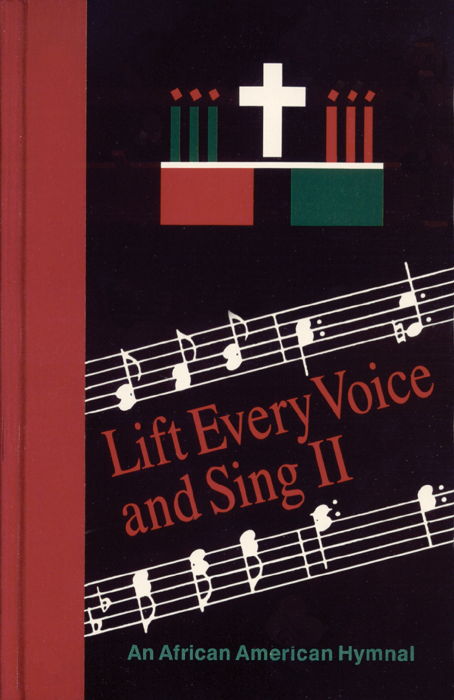
“What does LEVAS mean? We have been singing a lot of hymns that are from LEVAS lately.”

This is a great question! And — unlike some of the questions Stephanie and Phillip have been taking! — it’s not that complicated. (Phew!)

We have indeed been singing quite a few hymns from something called “LEVAS”. If you look carefully at a bulletin from February, you’ll find something like this:

Sequence Hymn: LEVAS II 221. This little light of mine

The Hymnal 1982 is the main and official hymnal of The Episcopal Church, but there are also supplements to the hymnal. The two most popular ones are Wonder, Love, and Praise, and Lift Every Voice and Sing II: An African-American Hymnal — known simply as “LEVAS II” or “LEVAS” for short.

You’ll notice that we began using this supplement a lot in February — and with that month being Black History Month, that was no coincidence.

Why is LEVAS important? Why was it commissioned, and why do we use it? I hope that this might be self-evident to most. The Hymnal 1982 is wonderful. However, it is markedly Anglo- and Euro-centric.

Canon 24, Section 1 states, “It shall be the duty of every Minister to see that music is used as an offering for the glory of God and as a help to the people in their worship… In fulfilling this responsibility the Minister shall seek assistance from persons skilled in music. Together they shall see that music is appropriate to the context in which it is used.”

While this article was no doubt referring to following good liturgical practice in accordance with The Book of Common Prayer when it mentions “the context in which it is used”, I would argue that this should stretch further. The context which we find ourselves in is one where white supremacy is embedded into mainstream American culture, its institutions, and its politics. We are in desperate need of voices of people of color, and all other marginalized groups.

LEVAS is an attempt to provide balance in our worship. Yes, we are Episcopalian and of the Anglican heritage. As much as I love Bach, Parry, Stanford, and Howells, being Anglican doesn’t mean only singing that repertoire and worshiping in one way. The Episcopal Church is diverse, and our worship should reflect that.

We have sung from LEVAS — and will continue to sing from LEVAS — because the “context” we are in needs to change.

— Bradley

Categories
From the Clergy Glad Tidings

Lent Question: Literal Faith

We received the following question in our Lenten Question Box, which Rev. Phillip answers below:

“I have been a Christian most of my life. But over the years I’ve had a harder and harder time reconciling a loving God with the horrors that were and continue to be enacted in the name of Jesus — be it historical violence like the Crusades / Inquisitions, or the present-day anti-LGBTQIA and white supremacy gospel of hate preached by ‘Christian fundamentalists’. I’ve also come to a point where I don’t believe literally in a lot of the historical claims of the Bible, like the Immaculate Conception. In an increasingly polarized religious landscape, where liberal and progressive Christian voices are dwindling, I don’t know if there is a place for me anymore. What would you say to someone like me? Do I need literal faith to be a Christian? How do I reconcile all of this?”

“Do I need literal faith to be a Christian?” My short answer is no, you do not need literal faith to be a Christian. This is another wonderful question because it invites us to think about our lives of faith. I would argue that most of us have asked this question, or one similar to it, at some point in our lives. We’ve probably also asked a host of other questions, too: Why does the Bible contradict itself? What if the Resurrection didn’t really happen? Was the whole world really covered by a flood? I absolutely love it when I hear the faithful (I’m using that word intentionally here) ask these questions. I love it because asking those questions is in and of itself an act of faith. Our faith isn’t meant to be static; Faith is meant to be a living, breathing, ever-changing, and ever-growing relationship with God. As someone who works with relationships day in and day out as a therapist, I can assure you that questions are healthy. Questions are indicative of curiosity, wonder, and care for those we ask questions of. Questions show that we want to know more. When asked of scripture, questions help us to grow closer to one another and to God.

“What would you say to someone like me?” I’d say that you are asking the right questions! Our Episcopal practices are rooted in asking questions to better understand God. I invite you to read about The Three Legged Stool. In our particular branch of Christianity, we hold scripture, tradition, and reason together. We acknowledge that each of these alone isn’t enough. But, held together, they inform one another and help us to better understand God and our lives of faith. Scripture is our primary source of understanding God, especially through the life of Jesus. But, because God can’t be contained in the words of the Bible, we need our lived experiences and the lived experiences of those before us for better understanding. Each Sunday we say the words of the Nicene Creed together. These words have formed Christians throughout history, and they have given us a foundation upon which we can build our own lives of faith — through shared language and understanding. We are undoubtedly informed by those who have gone before us each time we say those words together. In addition, we have our own lived experiences. We have reason, our own understanding, which has been given to us as a gift from God. Through our lived experience and understanding, we can better build on the tradition of our faith and more fully understand scripture. Given that each of us have different lived experiences, our understanding, although similar, will generally differ in some ways when we answer questions about God and our faith. Which brings me to the final question that was shared for us to answer.

“How do I reconcile all of this?” We do this through the via media. None of us is an expert on God — only God can understand Godself fully. Sadly, Christians throughout history have surely tried to claim exclusive expertise about God. But God is so much greater than anything we can fully comprehend, even with our Three Legged Stool. That’s why we need one another. That’s why we need the Church. Together, we are offered an opportunity to share our experiences and understandings of God and to hear the experiences and understandings of others. Together, we get a fuller understanding of God.

As the greater question in this post points out, literalism has done great harm to many of God’s beloved people. Even though that harm has been done in the name of God, it is not of God. I say this because it has not demonstrated love. As our Presiding Bishop Curry reminds us often, “if it’s not about love, it’s not about God.” As one body, we the Church, can live into being God’s Kingdom of beloved questioners and demonstrate God’s love to all those harmed by the Church. Together, we can welcome in all who have questions and all those curious to know God more fully. And, we can keep asking the questions that strengthen our lives of faith as we learn from one another.

— Rev. Phillip

Categories
Peace Library Reviews Social Justice

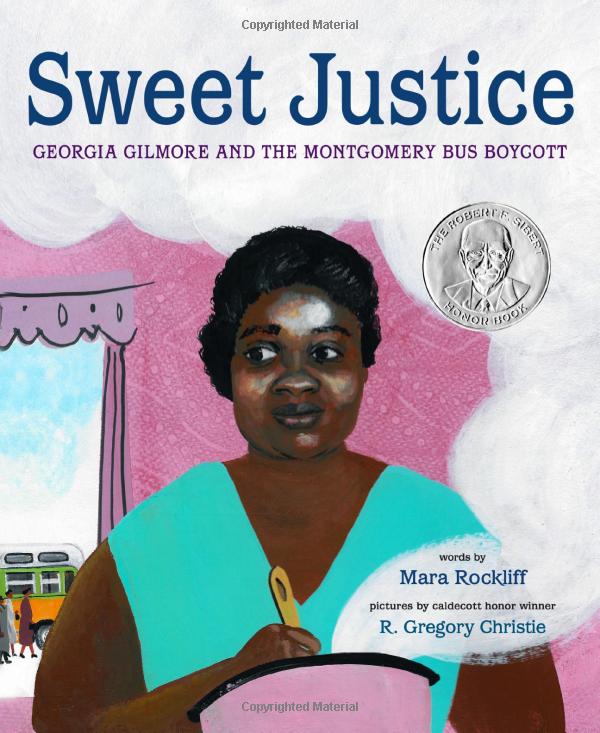
Sweet Justice (Peace Library Review)

Sweet Justice: Georgia Gilmore and the Montgomery Bus Boycott

by Mara Rockliff, author; and R.Gregory Christie, illustrator
review by Pete Crow


This tightly-written and well-illustrated book reveals a little-known dimension of the Montgomery Bus Boycott of December, 1955 through December, 1966. No doubt you have heard of the roles played by Rosa Parks and Dr. Martin Luther King. But do you know the fascinating story of Georgia Gilmore? Probably not. That’s why adults will enjoy this book as much as the kids they read it to or who read it themselves. Ms. Gilmore refused to ride the bus before Ms. Parks did, and her kitchen-turned-restaurant became a favorite meeting place and fundraiser for MLK and the boycotters. Warning: Be prepared to yearn for some old-time, home-cooked fried chicken. 

Questions to consider

Are there people in your life who do important things, like cooking or cleaning or carrying away our trash, who we don’t appreciate enough? Make a list. How can we show them they matter to us? 

Going deeper

What does segregation mean? Is there still racial segregation today? What do you think about that? 

Activity

As a family, try making one of Georgia’s recipes, Cold Oven Pound Cake

Biblical Reflections

Luke 22:7-12 

The Last Supper 

7 Then came the day of Unleavened Bread on which the Passover lamb had to be sacrificed. 8 Jesus sent Peter and John, saying, “Go and make preparations for us to eat the Passover.” 

9 “Where do you want us to prepare for it?” they asked. 

10 He replied, “As you enter the city, a man carrying a jar of water will meet you. Follow him to the house that he enters, 11 and say to the owner of the house, ‘The Teacher asks: Where is the guest room, where I may eat the Passover with my disciples?’ 12 He will show you a large room upstairs, all furnished. Make preparations there.’’ 

Once you have read this scripture about the Last Supper with your child, ask who they think prepared the meal for the last supper. How might this scripture reading be like the story of Georgia Gilmore? 

Learn more about Georgia Gilmore 

Categories
From the Clergy Uncategorized

Lent Question: Forgiveness

During the season of Lent, Stephanie and Phillip are answering questions from the congregation about being an Episcopalian, discipleship, church traditions and history, and spiritual practices. If you have a question, you can leave it in the wooden question box, which can be found next to the offering plates by the inner Narthex doors.

We received the below question, which is answered today by Rev. Phillip.

“Anger, disappointment and frustration keep me from getting closer to God this Lent. I struggle to reconcile these feelings towards people who have gravely hurt those I love with being able to forgive. This tension causes me to lose sight of the fact God loves them as much as all of us. I get further frustrated when those folks who cause harm refuse to own their actions or make real efforts to reconcile with those they continue to hurt. I don’t know what I’m asking you to do with this; it is a snapshot of my wilderness.”

This is a wonderful question that is filled with great insight! Forgiving our enemies and/or the enemies of those we love can be one of the hardest challenges of being a Christian and it is at the heart of this question. Of course, in our personal relationships we may ask for or offer forgiveness directly to another person to bring about reconciliation. However, when we think of forgiving those who harm us or others socially, financially, or politically, the reality is that those we forgive often have no idea whether or not we have forgiven them. Therefore, we have to understand that forgiveness is about us. When we are trapped by resentment and anger we become focused on the behavior of others. When we do this we end up spending our time and energy on those who have upset us. This takes away from our time and energy being given to those we love and in our walk with God. Forgiveness of others strengthens our relationship with God by freeing us from emotional burdens of anger, disappointment, and frustration. It frees us to refocus our energy into loving ourselves, our neighbors, God, and even our enemies. Ultimately, forgiveness frees us from judging others and offers reflection of where we may need to establish healthy boundaries and practice loving ourselves.

In my clinical work, I often hear clients share their desire to forgive and how that desire is complicated by shame. Most of us are familiar with the verse from the Gospel of Matthew that reads, “Do not judge, or you too will be judged.”¹ Even for clients who did not grow up in the church or who profess any religious belief, there is a general rule that judging others is wrong. So, when we are hurt and experience anger or frustration, we often feel shame about our emotional reaction because it can feel like judgment.

I define judgment as having an opinion with condemnation. I may see someone as bad, wrong, or evil. And, I may want to punish those who have hurt me or those I love. But, God doesn’t see it this way. God loves us all, even those who persecute us. That’s why we leave judgment to God. One of the ways I practice this is by reminding myself that the pain I see others causing is their work to figure out with God, not mine. I have enough of my own stuff to work out. And, I’m grateful for a God that is loving of us all as we work out our issues.

But that doesn’t mean that we don’t pay attention to how our bodies and our emotions react to our own pain or the pain of others. So what do we do with our experiences of those who hurt us or others? How do we forgive without judgment? To do that, we practice self care. We practice what Jesus has commanded, “Thou shalt love the Lord thy God with all thy heart, and with all thy soul, and with all thy mind. This is the first and great commandment. And the second is like unto it, Thou shalt love thy neighbor as thyself.”² Loving ourselves looks like understanding our emotions and holding healthy boundaries. Our emotions are not good or bad. They are gifts that God has given us and they reflect what is happening in our lives. Emotions that we are comfortable with or that “feel good,” such as happiness or joy reflect when our needs have been met. Other emotions, such as anger, disappointment, and frustration generally reflect when a need hasn’t been met. In the framework of this question, that is most often tied to not feeling a sense of physical or emotional safety. So, I can name my anger, disappointment, and frustration with someone’s behavior without judging them. It is a healthy and appropriate act of self care to name what I am experiencing. Then, I can decide what loving myself looks like.

Perhaps, it looks like setting healthy boundaries around myself or those I love. Maybe it looks like taking social, financial, or political action and using my voice to speak for those who are being harmed. It may even look like a relaxing spa day! I encourage you to think of forgiveness as a letting go and not an approval of someone’s actions. Letting go of those feelings of anger, disappointment, and frustration, as well as letting go of unhealthy relationships can be healing. It also frees us to do the radical work of loving ourselves and others. It isn’t always easy. But, with God’s help, it is possible.

  1. Matthew 7:1, NIV
  2. Matthew 22:37–39, KJV
Categories
Glad Tidings Uncategorized

Fellowship at Nativity

Starbucks coffee and the best chocolate chip banana bread — Did you miss it? Hot chocolate and Girl Scout Cookies — Did you get a Thin Mint before they were gone?

You may have noticed that we have started having refreshments and fellowship in the Narthex after services. If you haven’t stopped on your way out after the service, please help yourself to some refreshments, and make a connection with someone new or catch up with someone you haven’t seen in a while.

If you like having our after-service fellowship, then I could use some volunteers to help organize it. It is very straightforward: it involves making coffee (very easy), and washing the coffee pots (also easy!).

This Sunday, March 5, I will be in Estill House making coffee at 10 am. If you are interested in seeing how easy it is, then come on over! I will also be in the Narthex after the 10:30 service if you would like to find out more or let me know that you’re interested. Individuals, couples, and families (including your children) might like to give it a try.

Email Sheila Knapp

— Sheila Knapp